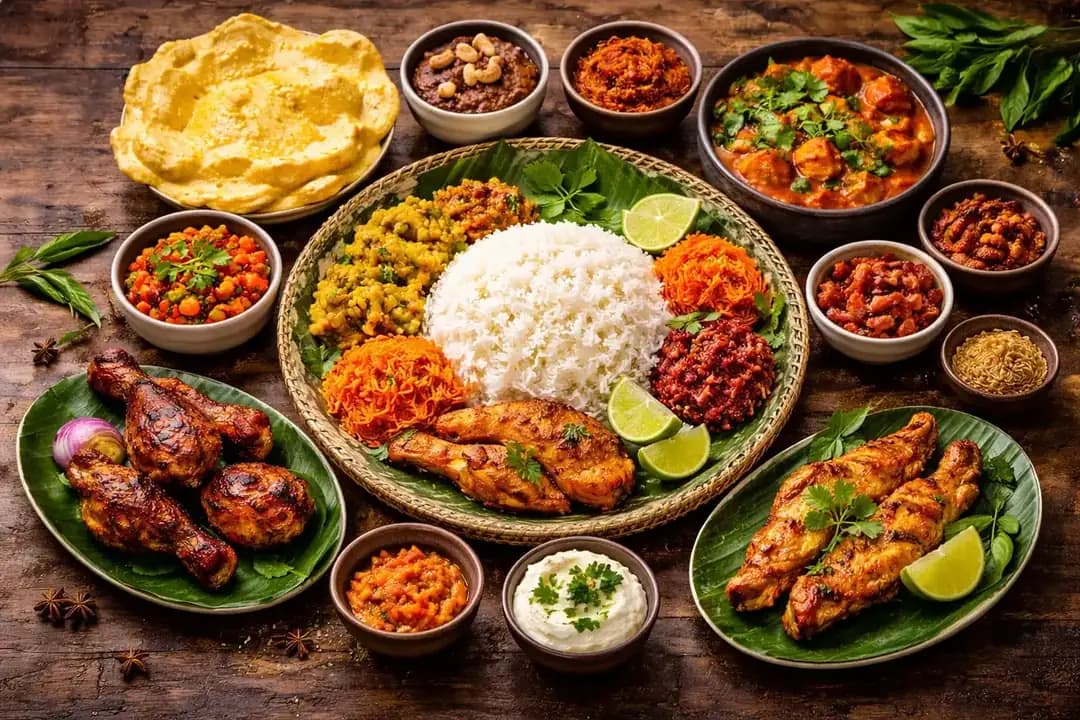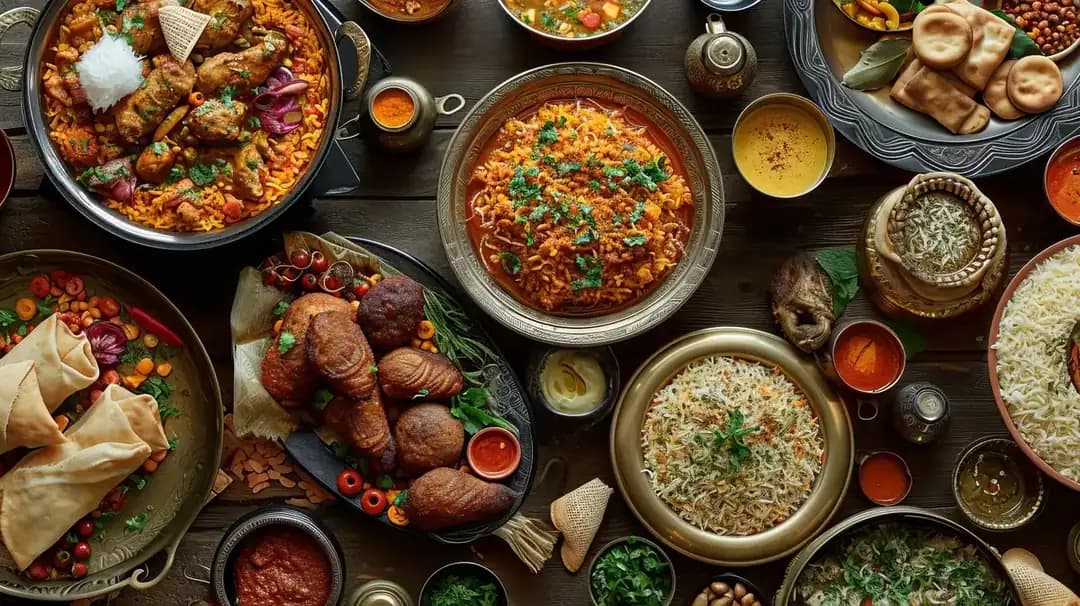
Rice in the middle, curries around it, sambal at the edge. A short guide to the most sociable dish on our menu.
The Ceylon rice table — rice and curry — is not a dish but a way of eating. Seeing it for the first time can feel overwhelming: many small bowls, all at once. Here is how it works.
The layout
Rice sits in the middle. Around it stand the curries: usually one with meat or fish, and two or three with vegetables — dhal, pumpkin, aubergine, jackfruit or beans. At the edge you find the sambals: coconut sambal, lunu miris or a fiery onion sambal. They are not side dishes but seasoning.
How to eat it
Do not mix everything together. The art is to build a small combination per bite: some rice, one curry, a corner of sambal. That way every bite tastes different — which is precisely the point. In Sri Lanka this happens with the right hand, fingertips folding rice into sauce. Cutlery is fine too; we are not watching.
Start mild and work toward the sambal. It is there to wake up the last few bites.
At Kurundu
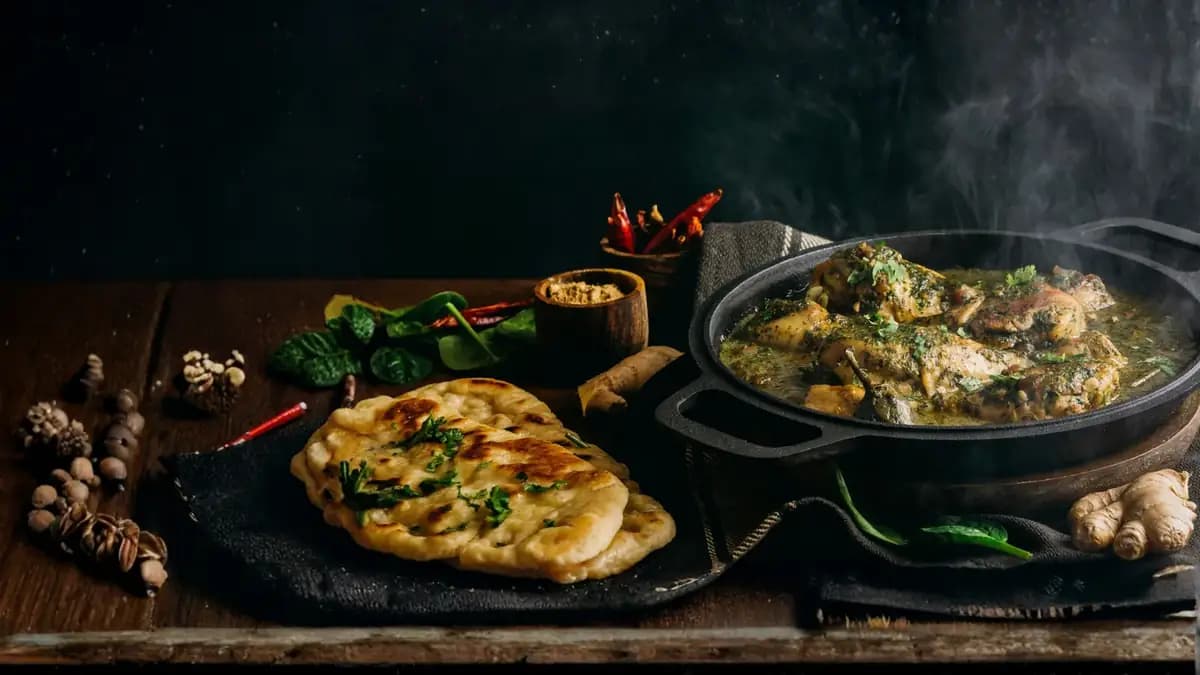
With every Ceylon main course you get rice and two different vegetable curries at no extra cost. That is not an offer — it is simply how it should be. A rice table without vegetables around it is not a rice table.
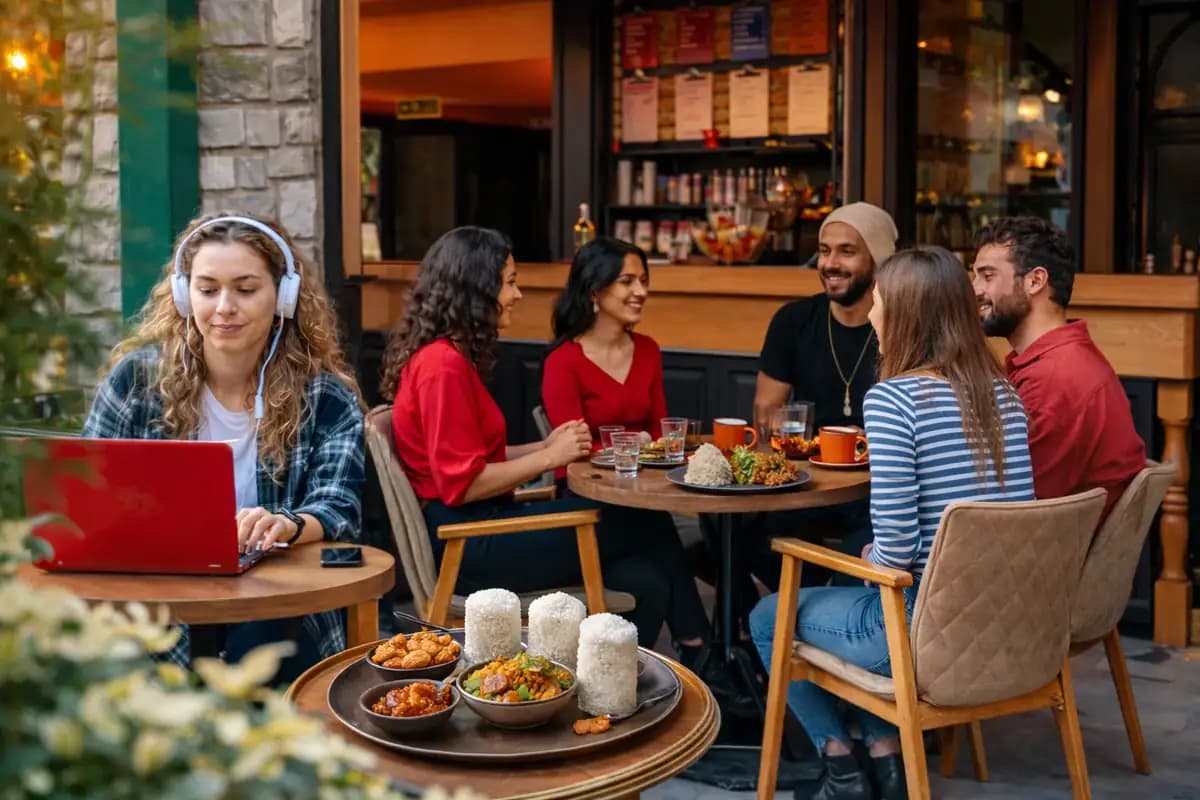
Come with a few people and order different curries. Then you share, and that is exactly how it is meant to be.